Spellcaster Game Overview
Overview
Learn how Spellcaster uses mastery-based progression, spaced practice, and structured literacy activities to help learners build lasting reading and spelling skills.In Depth
How Spellcaster Works
Spellcaster turns structured literacy instruction into a fantasy adventure. The game targets orthographic mapping — forming print-sound connections so words stick in long-term memory.
Design Principles
- Follows a systematic, phonics and morphology focused scope and sequence
- Teaches English spelling patterns directly
- Aligns with evidence-based reading instruction
- Covers both phonics and morphology
How Progression Works
Spellcaster uses mastery-based progression. Learners stay on a level until they've shown they know the content, then move on.
Moving to the Next Level
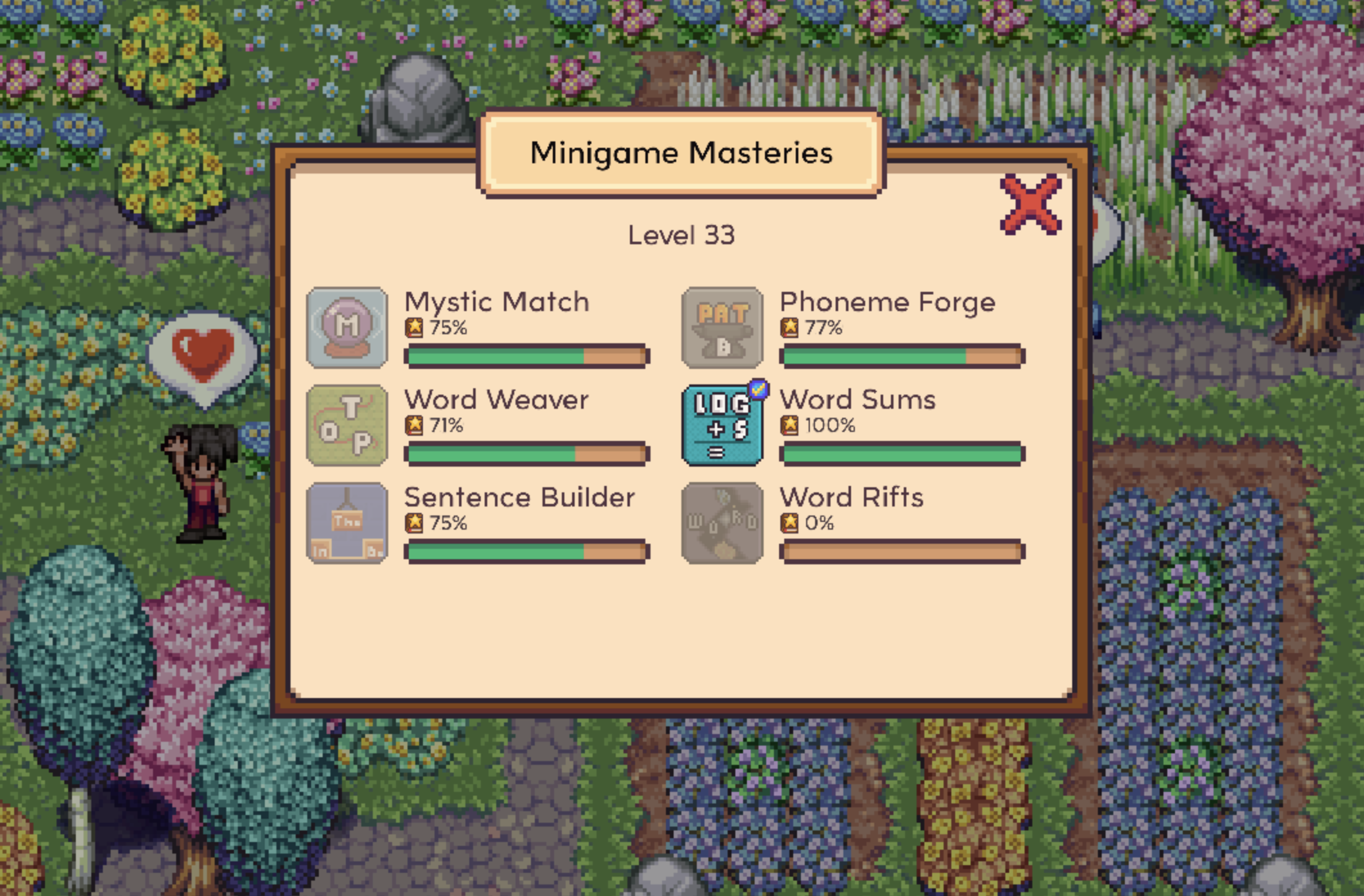
Each level contains several mini-games. Once a learner hits 90% accuracy across all of them, they unlock the next level and move forward in the scope and sequence.
Staying on a Level
If a learner doesn't reach 90% in one or more mini-games, they stay on the same level — but the map changes to a different style. This keeps things feeling fresh rather than repetitive while they get more practice with the same content.
Manual Override
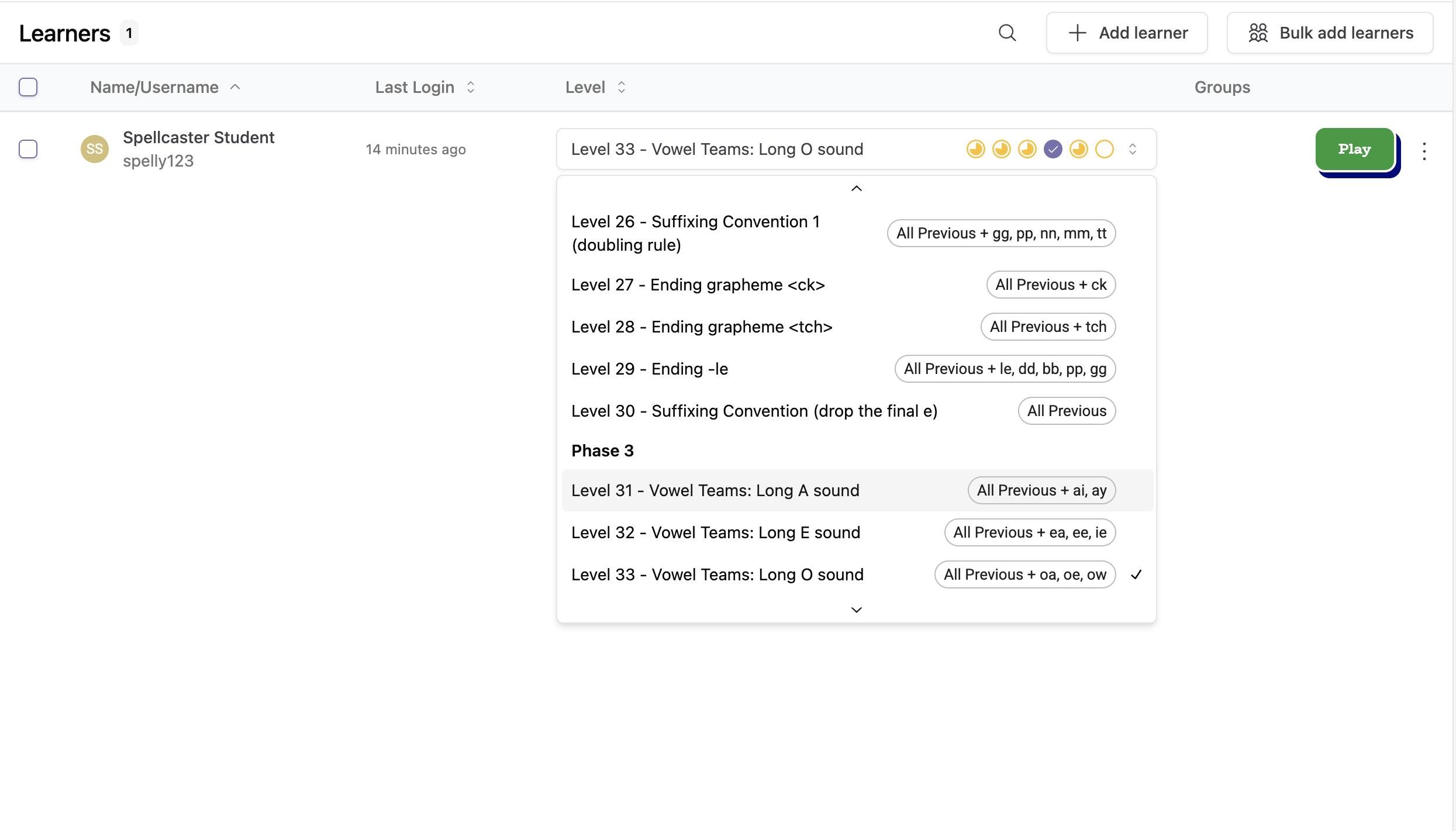
Educators can move a learner to any level at any time via the dashboard. This is useful for placing new students at the right starting point or skipping content a learner already knows.
How the Game Supports Retention
The game uses a few well-established learning principles to help skills stick:
- Spaced practice: Content from earlier levels comes back for review
- Interleaved practice: Current and previous content are mixed together
- Retrieval practice: Learners recall words they've already studied
- Immediate feedback: Performance is tracked in real time so learners know where they stand
What Learners Cover
The scope and sequence moves from simple to complex:
- Starts with one-to-one letter-sound correspondences
- Introduces more complex letter patterns over time
- Builds in morphological awareness (prefixes, suffixes, bases)
- Combines new concepts with previously learned content
Content Mix in Each Level
- Mostly current-level content
- Review words from the previous two levels
- Ongoing reinforcement of earlier skills
For Educators
Spellcaster gives educators visibility and control:
- Track learner progress and mastery through the dashboard
- See which levels and mini-games each learner has completed
- Adjust game settings (e.g. volume)
- Use flexibly across different learning environments — whole class, small group, or one-on-one